Your commercial restroom’s accessories make or break the user experience. Grab bars, dispensers, hooks, and shelving aren’t afterthoughts-they’re essential components that affect safety, hygiene, and how visitors perceive your facility.
At Partition Stalls, we’ve helped hundreds of businesses select the right toilet partition accessories that balance functionality with budget. This guide walks you through what matters most when upgrading your restroom setup.
What Accessories Do Commercial Restrooms Actually Need?
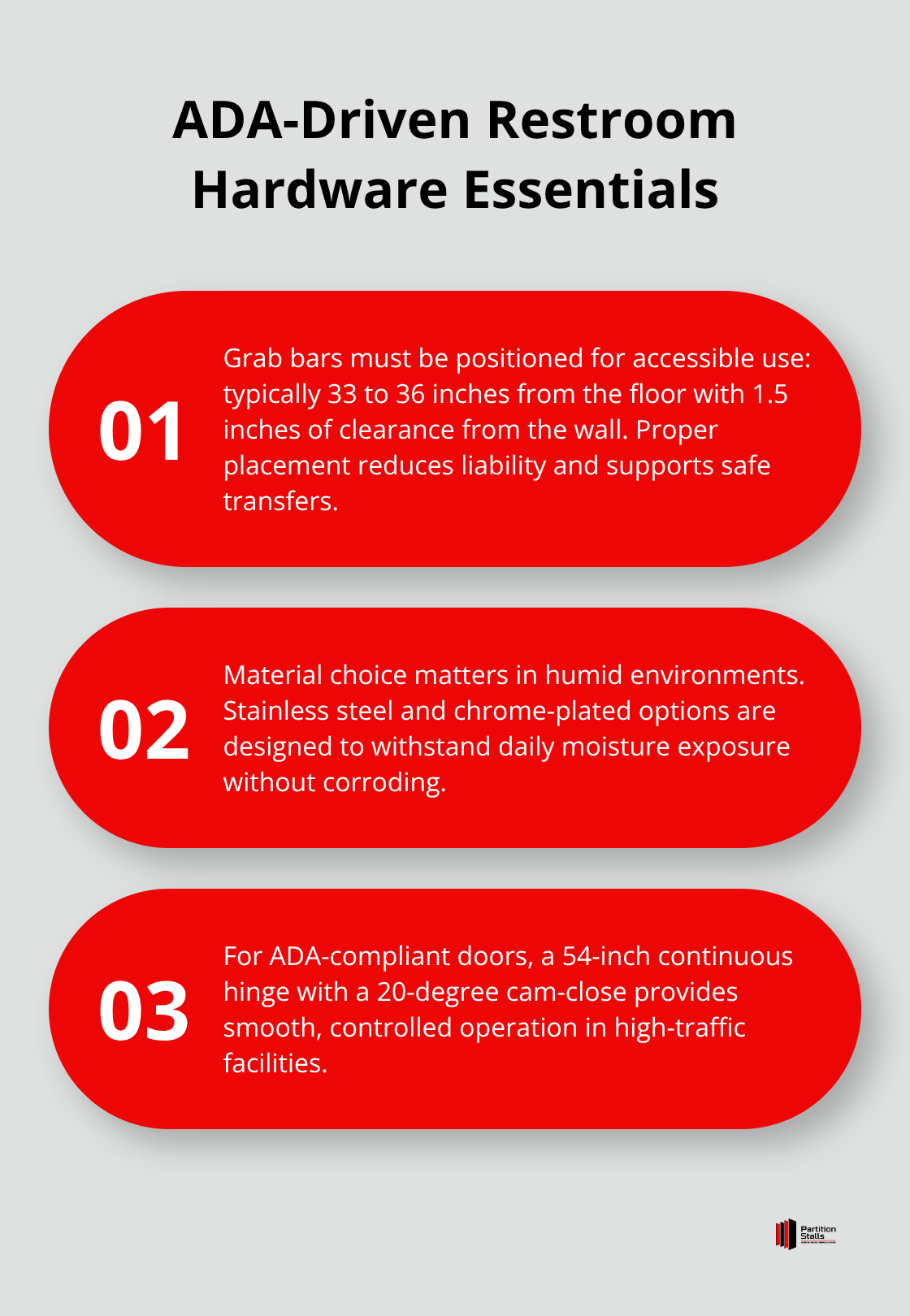
Grab bars aren’t luxury additions-they’re legally required in most commercial restrooms under ADA standards, and they directly impact liability. The ADA requires grab bars in accessible stalls, typically 33 to 36 inches from the floor, mounted 1.5 inches from the wall. Stainless steel or chrome-plated options withstand daily moisture exposure without corroding. A 54-inch continuous hinge with a 20-degree cam-close works as the standard for ADA-compliant doors and ensures smooth operation in high-traffic facilities.
Beyond compliance, grab bars signal to visitors that your facility takes safety seriously.
Toilet Paper Dispensers Control Costs and Waste
Toilet paper dispensers create surprising operational costs-facilities using low-quality holders waste more paper than those with sturdy, well-designed dispensers that control dispensing speed. Solid plastic or stainless steel dispensers outlast cheaper alternatives by years, reducing replacement frequency and maintenance headaches. Hooks and shelving solve real problems: visitors need somewhere to place bags and coats, and restrooms without these accessories see increased floor clutter and water damage. One-ear or two-ear bracket configurations accommodate different panel thicknesses, typically 3/4 inch to 1 inch, so verify your partition material before ordering.
Material Durability Outweighs Initial Price
Zamac die-cast chrome-plated hardware costs less upfront but corrodes faster in humid restroom environments compared to stainless steel or anodized aluminum. Facilities in coastal or high-humidity regions see chrome-plated hardware fail within 18 to 24 months, while stainless options last five to seven years. Solid phenolic or powder-coated steel panels resist moisture and vandalism better than plastic laminate, particularly in gyms, restaurants, and public facilities where restrooms experience heavy use. The global toilet partition market reaches 2.90 billion dollars by 2030, driven largely by demand for durable, hygienic solutions that reduce maintenance costs. Powder-coated metal remains the dominant material because affordability and durability align well, but solid surface materials like Corian gain traction in premium facilities where aesthetics and easy cleaning justify higher costs.
Accessibility and Touchless Features Shape Modern Design
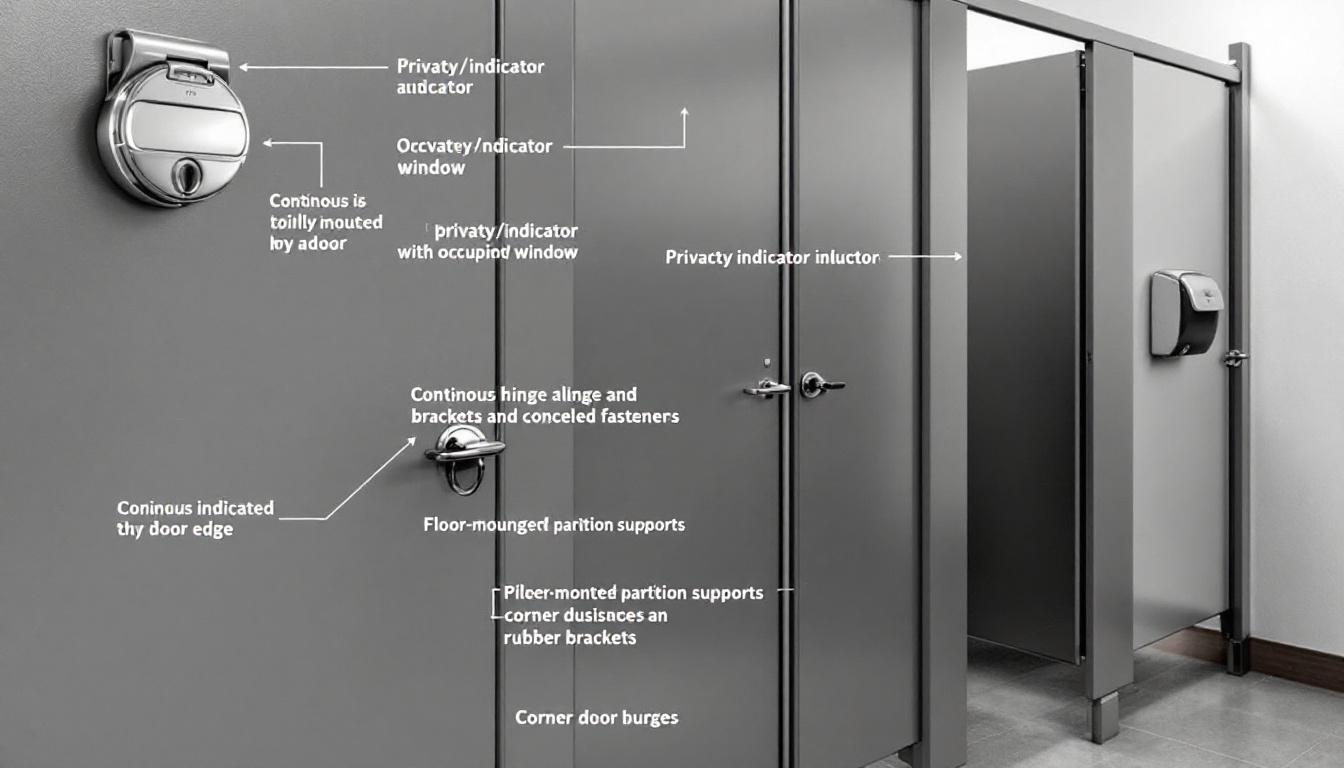
ADA-compliant latch hardware with concealed turn latches and indicator covers now comes standard on most commercial systems, signaling occupancy while maintaining privacy. Touchless opening mechanisms and sensor lighting improve user experience in high-traffic restrooms, though these require compatible actuators and wiring planning. Anti-ligature hardware and matte black finishes reflect safety priorities in institutional facilities like schools and healthcare settings, where design choices prevent harm. Privacy screens and urinal splash screens add functional value without major cost, reducing visual exposure and improving user comfort. Most reputable manufacturers including Bobrick, Hadrian, Global, and Accurate offer cross-compatible hardware, so you avoid being locked into a single brand ecosystem when sourcing replacements or upgrades.
Finding the Right Hardware for Your Facility Type
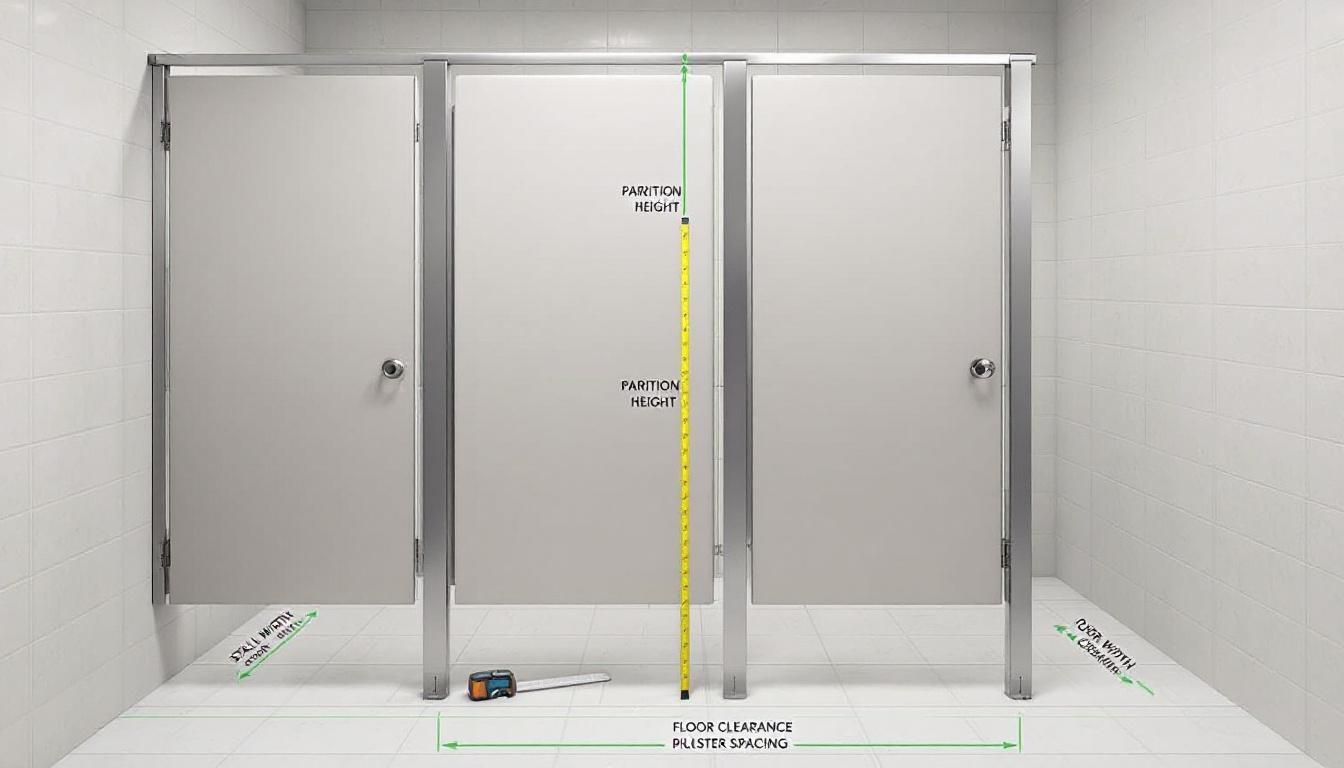
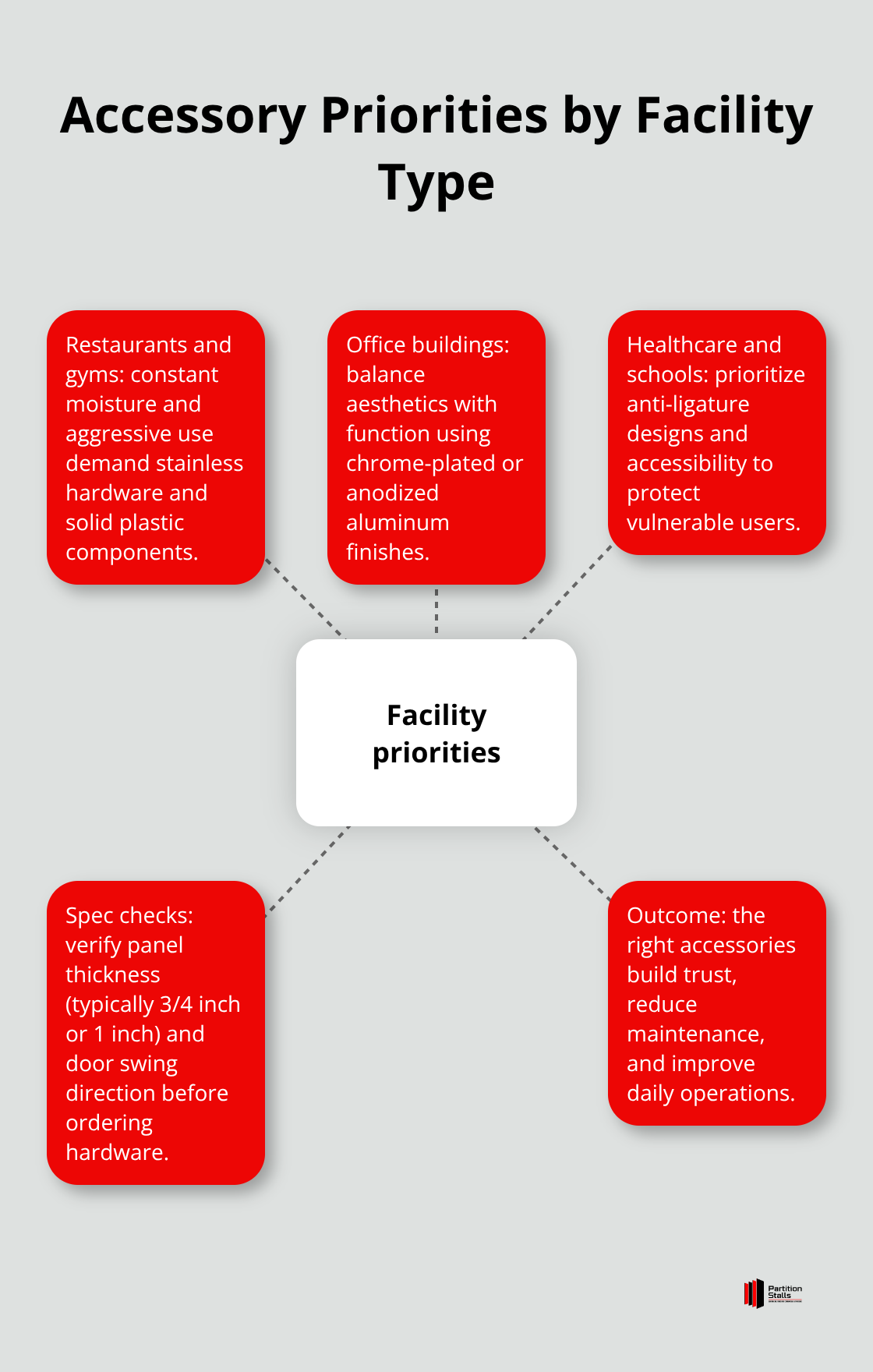
Your facility type determines which accessories matter most. Restaurants and gyms need heavy-duty hardware that resists moisture and frequent use, making stainless steel and solid plastic the smart choices. Office buildings prioritize aesthetics alongside function, so finishes like chrome-plated or anodized aluminum create a professional appearance. Healthcare facilities and schools require anti-ligature designs and accessibility features that protect vulnerable populations. Verify your partition material thickness (typically 3/4 inch or 1 inch) and door swing direction (inswing versus outswing) before ordering hardware, as these specifications determine which brackets, hinges, and latches fit your system. The right accessories transform a basic restroom into a facility that visitors trust and employees appreciate.
How Budget and Facility Type Drive Accessory Selection
Matching accessories to your facility type and budget requires understanding what actually fails in different environments. Restaurants and gyms experience constant moisture and aggressive use, meaning stainless steel hardware and solid plastic panels become non-negotiable investments rather than luxury upgrades. Chrome-plated Zamac hardware corrodes within 18 to 24 months in these high-humidity settings, forcing costly replacements that compound your initial savings into long-term waste. Office buildings tolerate chrome-plated finishes longer because restroom use patterns spread throughout the day, reducing moisture concentration. Healthcare facilities and schools face regulatory pressure beyond ADA compliance-anti-ligature hardware and concealed mechanisms prevent self-harm, making design choices a liability management issue rather than aesthetic preference.
Calculate Total Cost of Ownership Before Choosing Materials
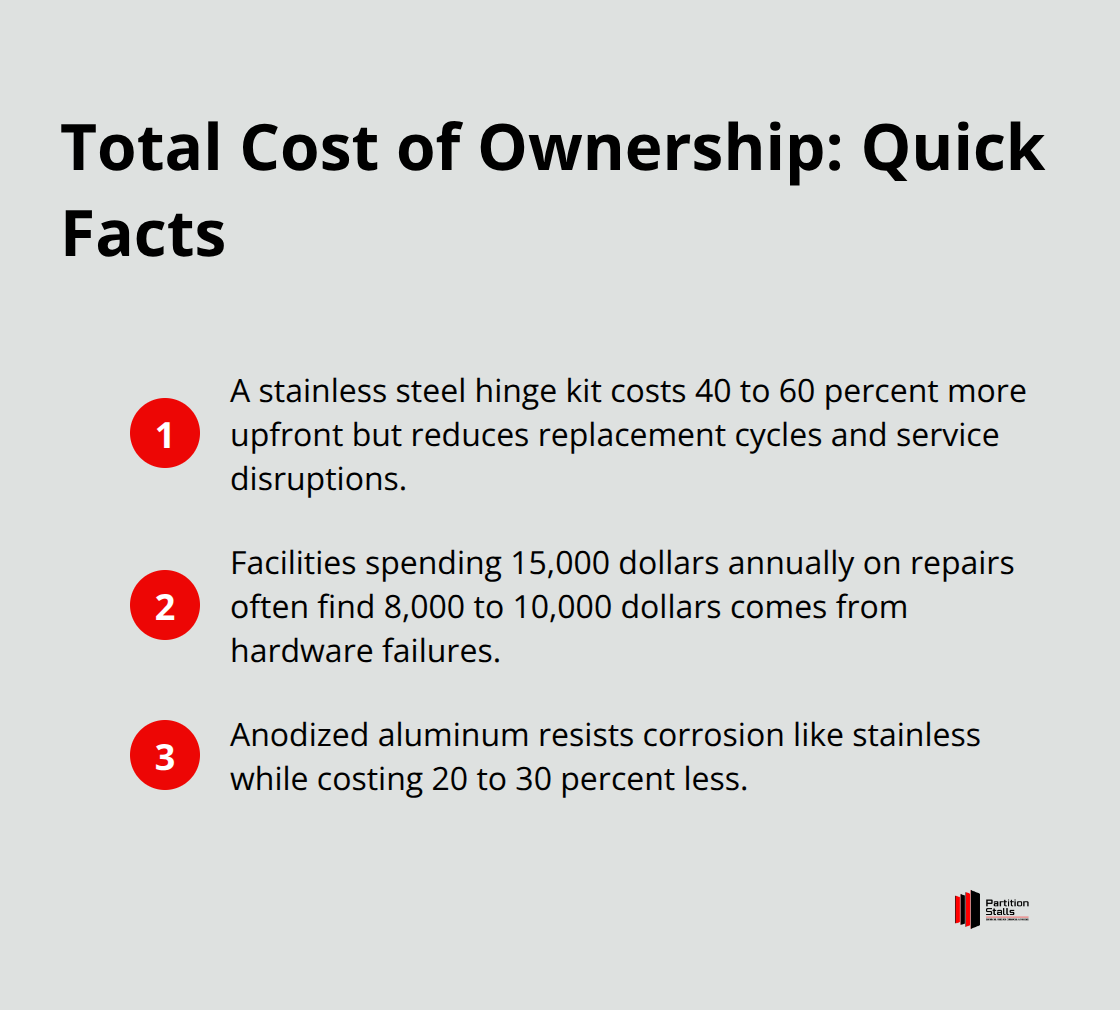
Budget constraints tempt facility managers toward cheaper Zamac or plastic hardware, but calculating total cost of ownership reveals the trap. A stainless steel hinge kit costs 40 to 60 percent more upfront but eliminates replacement cycles that consume maintenance staff time and create service disruptions. Facilities spending 15,000 dollars annually on partition repairs often discover that 8,000 to 10,000 dollars stems from hardware failures that better initial material selection would have prevented entirely. Anodized aluminum hardware resists corrosion comparably to stainless steel while costing 20 to 30 percent less, making it the practical choice for budget-conscious facilities that still demand durability.
Select Materials That Match Your Environment
Solid phenolic or powder-coated steel panels paired with stainless hardware create stability across facility types because maintenance demands remain predictable. Verify your panel thickness-typically 3/4 inch or 1 inch-before ordering brackets and hinges, as mismatched specifications force returns and project delays that frustrate both facility teams and contractors. ADA-compliant continuous hinges with 20-degree cam-close mechanisms reduce door slamming that accelerates hardware wear, extending the lifespan of your entire system by years. Inspect your current partition material during the selection phase-if you operate plastic laminate stalls in a high-moisture environment, upgrading to solid plastic or phenolic during your next accessory refresh prevents recurring maintenance headaches.
Prioritize Safety Features in Regulated Facilities
Anti-ligature hardware and matte black finishes cost marginally more than standard options but become mandatory in schools, detention facilities, and psychiatric care settings where safety regulations demand specific design features. Most manufacturers including Bobrick, Hadrian, Global, and Accurate maintain cross-compatibility, allowing you to source replacements without committing to single-brand ecosystems that restrict future flexibility. This flexibility matters when your facility evolves and you need to upgrade specific components without replacing entire systems. Understanding which accessories your facility type actually requires-rather than which ones sound appealing-determines whether your investment pays dividends or drains your maintenance budget year after year.
Trends in Commercial Restroom Accessories
Hygiene-First Design Reshapes Facility Standards
The commercial restroom accessory market shifts toward three concrete demands that facility managers can no longer ignore: hygiene-first design, material sustainability, and finishes that look intentional rather than institutional. The global toilet partition market reaches 2.90 billion dollars by 2030, reflecting this transition, with Asia-Pacific driving 38.5 percent of growth through infrastructure expansion in hospitality and healthcare sectors.
Touchless hardware and antimicrobial coatings become baseline expectations in restaurants, gyms, and office buildings where restroom cleanliness directly influences customer perception and employee retention.
Facilities that installed standard chrome-plated hardware five years ago now face pressure to upgrade because visitors expect sensor-activated dispensers, motion-activated faucets, and surfaces treated to resist bacterial growth. Stainless steel hardware with antimicrobial finishes costs 25 to 35 percent more than basic chrome-plated alternatives, but facilities report reduced maintenance labor and fewer restroom-related complaints after implementation. The shift matters operationally because touchless mechanisms reduce contact points where pathogens spread, and your maintenance team spends less time unclogging manual dispensers or replacing broken latches from aggressive use.
Sustainable Materials and Intentional Finishes Drive Upgrades
Sustainable materials and intentional design finishes now differentiate premium facilities from budget operations. Powder-coated metal remains dominant due to affordability and durability, but solid surface materials like Corian and recycled-content phenolic panels gain traction in corporate offices and upscale hospitality where aesthetics justify higher costs. Matte black hardware and warm neutral finishes replace the institutional chrome look that dominated commercial restrooms for decades, signaling that your facility invested in thoughtful design rather than cutting corners.
Facilities managers selecting accessories today should prioritize stainless steel or anodized aluminum hardware over cheaper Zamac options because corrosion resistance extends equipment lifespan in humid environments. Anti-ligature hardware with concealed mechanisms now appears in mainstream commercial settings beyond schools and healthcare, reflecting broader safety consciousness in facility design.
Material Combinations That Balance Cost and Longevity
Pairing solid phenolic or powder-coated steel panels with stainless steel hardware and matte finishes creates durability without sacrificing modern aesthetics. This combination balances long-term cost predictability with visual appeal that improves how visitors perceive your space. Solid phenolic or powder-coated steel panels paired with stainless hardware create stability across facility types because maintenance demands remain predictable and corrosion resistance extends equipment lifespan significantly.
Final Thoughts
Quality toilet partition accessories transform restrooms from functional spaces into environments that visitors and employees actually respect. Stainless steel hardware, antimicrobial finishes, and thoughtful design details reduce maintenance costs, extend equipment lifespan, and signal that your facility prioritizes cleanliness and safety. Facilities that paired solid phenolic panels with stainless hardware report 40 to 50 percent fewer replacement cycles compared to those using cheaper chrome-plated alternatives, meaning your initial investment pays dividends across years of operation.
The right accessories address real operational problems that affect your bottom line. Touchless dispensers reduce waste and contact points where pathogens spread, while anti-ligature hardware protects vulnerable populations in schools and healthcare settings. Grab bars and accessible latches meet legal requirements while preventing liability exposure, and these practical solutions improve daily operations and user experience simultaneously. Calculate total cost of ownership rather than comparing upfront prices alone, because cheaper hardware fails faster and creates recurring maintenance disruptions that compound initial savings into long-term waste.
Your facility type and current condition determine your next steps. Restaurants and gyms should prioritize stainless steel and solid plastic materials that withstand moisture and aggressive use, while office buildings can balance aesthetics with durability through anodized aluminum and matte finishes. Healthcare facilities and schools must verify anti-ligature compliance and accessibility features before purchasing toilet partition accessories. Contact Partition Stalls to transform your restroom with solutions that balance functionality, durability, and design.